

Insiders know that there are a few months on Alabama’s Gulf Coast when the beach belongs almost entirely to locals. A time when restaurants can seat you right away, Gulf State Park actually has parking space, and the sand runs empty in both directions.
This is the magic of shoulder season, the calm between the summer rush and the crowds that arrive for the holidays and spring break. It’s one of the most underrated times to visit Gulf Shores, as long as you’re open to a little bit of compromise.
If a slower trip sounds ideal, shoulder season is a great time to come to the coast. Book one of our vacation rentals, then read on to learn what to expect during shoulder season in Gulf Shores.
What Shoulder Season Looks Like on the Alabama Gulf Coast
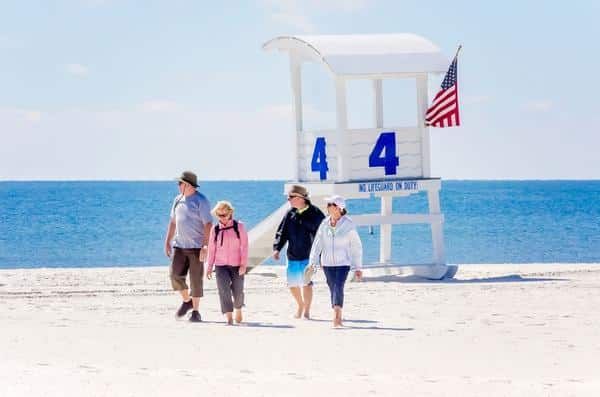
Shoulder season on the Gulf Coast covers two time periods, when the region feels like an entirely different planet than in June through August.
The first runs from January until early spring, ending when spring break crowds arrive in late March or early April. February is the slowest month on the calendar, which is exactly why some crafty travelers make plans for it.
The second runs from late fall into early winter, beginning in mid-September. There are slight upticks in crowds during the National Shrimp Festival in October and over Thanksgiving weekend in November, but otherwise things are quiet until holiday season kicks in properly in mid-December.
Weather during both shoulder season periods is mild rather than warm. Average highs sit in the 60s and low 70s, mornings are chilly, and afternoons often turn bright and comfortable enough for a long hike.
The average water temperature is the one hiccup of the shoulder seasons, since the Gulf stays too cold for most people to enjoy swimming.
You’ll notice the pace change too. Seasonal businesses cut back their hours, school schedules keep most families home, and the big annual events land on either side of these off-season weeks.
For a fuller month-by-month breakdown, our guide to the best time to visit Gulf Shores covers the whole coastal calendar in more detail.
Shoulder Season Things to Do in Gulf Shores

Mild weather and chilly waters make shoulder season the perfect time to get outdoors away from the beach. Check out our guide to non-beachy activities in Gulf Shores, or read on for some of our favorites.
Paddle the Backwaters of Little Lagoon
- Location: Little Lagoon
- Best for: Calm-water paddling and wildlife spotting
- When to go: Early morning before the wind picks up
Little Lagoon is a shallow, protected stretch of water tucked behind the dunes. It’s at its best once summer’s boat traffic disappears. Cooler air also keeps the bugs down and the water clear enough to watch rays and mullet glide under your kayak.
Kayaking in Gulf State Park is another option if you’re looking for an alternative launch spot. Whether you rent a kayak or bring your own, you can easily paddle away for the day on the Shelby Lakes, with launches right off the main road.
Hike or Bike the Backcountry Trail
- Location: Hugh S. Branyon Backcountry Trail
- Best for: Hiking, biking, and easy wildlife watching
- When to go: Mid-morning, once the chill burns off
The Backcountry Trail runs roughly 28 miles through Gulf State Park, linking pine flatwoods, freshwater marsh, and coastal dune habitat on paved and unpaved paths.
Summer heat makes the longer stretches a slog, which is exactly why these cooler months are the perfect time to walk or ride.
The Rosemary Dunes and Gulf Oak Ridge segments give you the most variety in the shortest distance. Go early, and you just might see more alligators sunning on the bank than you do other people.
Cast a Line from the Gulf State Park Pier
- Location: Gulf State Park Pier
- Best for: Fishing without a boat
- When to go: Fall and early winter, on an incoming tide
Fall fishing from the pier is some of the best of the year, with redfish and speckled trout moving through as the water temperature drops. The Gulf State Park Pier also stands strong no matter how rough the Gulf looks, which matters more in these months than it does in July.
Bring layers, because the wind off the water makes 60° feel a lot colder at the end of the pier.
Book a Backwater Fishing Charter
- Location: Orange Beach Marina
- Best for: Inshore fishing when the Gulf is choppy
- When to go: Calm mornings after a front passes through
Winter fronts can make the open Gulf too rough for offshore trips, but the bays and backwaters stay fishable almost all season. Some captains still ply the Intracoastal Waterway, Wolf Bay, and Perdido Bay for redfish and sheepshead throughout the cooler months.
Charters rarely fill up in shoulder season, so you can often get on the water with just a few days of notice.
Spot Migrating Birds at Bon Secour National Wildlife Refuge
- Location: Bon Secour National Wildlife Refuge
- Best for: Birding and quiet walking
- When to go: Fall migration, first thing in the morning
Bon Secour sits along a major migration route, and fall pushes waves of songbirds and raptors through the refuge before they cross the Gulf. It’s one of the few places on this coast where you can still walk for an hour and likely see no one.
The Pine Beach Trail is the one to take, running about two miles from the parking area out to the Gulf between Little Lagoon and Gator Lake. Wear shoes you don’t mind getting sandy, as the last stretch is soft.
Tour Fort Morgan State Historic Site
- Location: Fort Morgan State Historic Site
- Best for: History and open-air walking
- When to go: Sunny afternoons
Fort Morgan is almost entirely an outdoor site, with brick casemates, open ramparts, and a long walk around the water battery. August humidity makes outdoor attractions like this less enjoyable, but in the balmy shoulder season weather the ramparts make for a perfect afternoon stroll.
The drive out the peninsula is part of the experience, with the bay on one side and the Gulf on the other most of the way. Our first-timer’s guide to Fort Morgan covers what to see once you’re inside the walls.
Hunt for Shells After a Storm Front
- Location: Fort Morgan peninsula beaches
- Best for: Beachcombing and slow mornings
- When to go: The morning after a winter front blows through
During the shoulder season, winter fronts often stir up the surf and push shells onto the sand. Considering beaches are virtually empty in these months, what washes up tends to stay there. This is the one beach activity that genuinely improves in the off months.
For better shelling, walk the quieter stretches out toward Fort Morgan rather than the public beaches near the main strip. Try to head out at first light, before any other walkers work the same tide line.
Play a Round of Golf
- Location: Gulf Shores Golf Club
- Best for: Easy tee times and comfortable walking
- When to go: Late morning into the afternoon
Golf is one of the few activities here that is objectively better outside peak season. Shoulder season temperatures sit in the range where you can walk 18 holes without wilting from the heat, and the tee sheets are no longer packed with summer visitors.
Don’t worry about seasonality. Courses across Gulf Shores and Orange Beach stay open year-round, and rates outside the busiest months are usually friendlier.
Our roundup of the best golf courses in Gulf Shores breaks down which ones are worth the drive.
The Honest Pros and Cons of a Shoulder Season Trip

No season here is perfect, and shoulder season does come with some trade-offs. Here is what you gain and what you give up.
Pros of Shoulder Season in Gulf Shores
- Fewer crowds: Beaches, trails, and parking lots feel close to private, which changes the whole experience.
- Lower rates: Vacation rental and flight prices generally drop once peak season ends, and prices on midweek stays drop even further.
- No waiting: Restaurants seat you without hours of waiting, and you won’t face any lines at attractions.
- Better wildlife: Migrating birds, an active inshore bite, and dolphins that are easier to spot on flat water.
- Easier with little kids: Short lines and open sand make the destination far less overwhelming for families with kids too young for school.
- Room to roam: You can pick a trail, a tee time, or a charter on short notice instead of planning your days around availability.
Cons of Shoulder Season Travel
- Cold water: Water temperature stays too cold for comfortable swimming through most of both off-season windows.
- Reduced hours: Some seasonal restaurants and outfitters reduce their working days or close for part of the winter.
- Fewer events: The big annual draws, like the Hangout Music Festival in spring and the National Shrimp Festival in October, land outside these windows.
- Weather risk: Cold fronts and gray stretches are both possibilities, and the tail end of hurricane season runs into the fall shoulder season window, so travel insurance is still worth a look.
If the success of your trip depends on long, hot beach days and a packed schedule of events, book a different window. If you want warm water without July prices, late April and May are the better compromise.
If what you want is space, quiet, and time outdoors without the heat and crowds, shoulder season is for you.
Plan Your Shoulder Season Gulf Shores Getaway
Shoulder season rewards travelers who would rather have the trail to themselves than a beach chair on a crowded stretch of sand. Pack layers, plan around the weather, and build your days around the water instead of in it.
Once you’re ready to lock your dates, browse our vacation rentals across Gulf Shores, Orange Beach, Perdido Key, and Fort Morgan. Find a home with the space to spread out and savor the peace that the off-season has to offer.